 |
Title to the Office.
The office is hereditary to heirs general, and where a person dies seised in fee of this office, leaving no male but two female heirs, the office belongs to such daughter as the king shall direct, who may appoint a deputy, but he must not be under the condition of a knight, and must be approved by the king. This is the case at present; the office became vacant by the death of the duke of Ancaster, and was assigned to his grace's eldest daughter, Lady Willoughby, of Eresby, who appointed her husband, Lord Gwyder, to officiate for her.
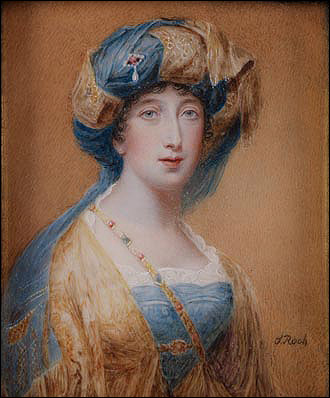
Priscilla Bertie, 21st Baroness Willoughby de Eresby
The Serjeants at Arms: are ten, eight attend at court, one at the House of Commons, and one upon the lord chancellor; they bear the mace as a badge of office.
The Historiographer had an old salary of 1Ol. a year.
The Poet Laureat: has a salary of 50/. a year, and an annual allowance of 3Ol. in lieu of a butt of sack; little or no duty is now annexed to these two places.
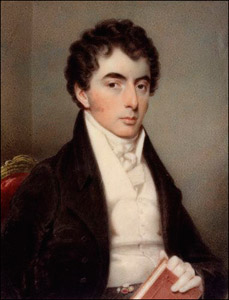
Robert Southey appointed Poet Laureat in 1813
The Examiner of Plays.
Without the license of this officer, no tragedy, comedy, opera, farce, or interludes, can be performed on the stage. On his report, the lord chamberlain acts.
The Surveyor of Pictures, and the Master of Mechanics, are places of honour, with a salary annexed, but little or no duty.
Yeomen of the Guard.
These are both military and civil; were established by Henry VII. as his body guard, and still wear the dress of that time. They consist of a captain, always a nobleman of high rank, a lieutenant and ensign, four exempts, a clerk of the check and secretary, eight ushers, and 100 yeomen. They wait in the first room above stairs by day, and watch by night, armed with a partizan and large sword. They attend the king whenever he goes abroad in state, by land or water, and carry up the dishes to the king's table.
Gold Sticks.
It may be proper here to notice officers who«e title often appear in the newspapers, but are not noticed in the Kalendar. The gold sticks are four; their badge of office is a cane, with a gold head, and they have a kind of military command in the palace, they wait in turns for a week, and give the word or military sign of the day. They are:
The Captain of the Yeomen of the Guard.
The Captain of the Gentlemen Pensioners.
The Colonel of the First Regiment of Life Guards;
Master Of The Horse.
His Duty and Privileges.
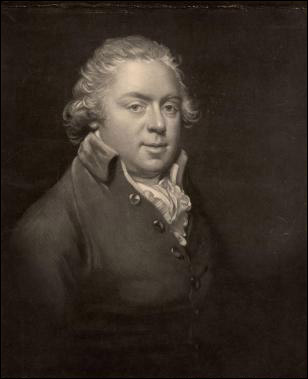
5th Earl of Chesterfield, Master of the Horse (1798–1804)
His duty is to see that his majesty's carriages, horses, &c. are properly kept, and the stables in good repair; he is allowed a coach and chariot, with a coachman, horses, and two footmen, who wear the royal livery. He rides before the king to the theatre, or any other place which his majesty visits in state. When the king goes to the House of Lords, he usually rides in the coach with him, and the equerries in the master's carriage. He has a salary of I,'2761. per annum, and the cast off horses and carriages are his perquisite: he pay?the' whole establishment, which, by Mr. Burke's bill, is limited to a certain annual sum. The whole establishment consists of a chief equerry or clerk marshal, four equerries in ordinary, four pages of honour, an equerry of the crown stables, two yeomen riders, a storekeeper and veterinary surgeon; but the chief business is carried on by the clerk of the stables and his assistant.
The Kings Hunt. consists of a master of the buck hounds, who, besides a salary of 2,000/. per annum, has the king's horses, and a servant in his majesty's livery to attend him. He has under him a huntsman, three whippers‑in, two feeders and a groom.
N. B.—The business of the king's master of the horse is transacted at the king's mews, Charing, Cross, where the clerk of the stables, who is the efficient officer, resides; and where attendance is given daily from 11 to 3.
The dignity of a monarch should be conspicuous in his establishments, in his palaces, his equipages, and his court. The palaces of the king of England are many, but in his town residence, few monarchs exhibit less state. The palace of St. James's being the only one in London; and as the king has resided for many years at the queen's house ( later called Buckingham Palace) when in town, this palace has been much neglected. Yet his majesty, while in health, constantly kept his court here. Here he received' the foreign ambassadors and all addresses; and all proclamations and acts of council were issued from hence. Here the royal guards continue to do duty every day. Hyde park and that of St. James's, may be considered as appendages to this palace.
Residences: Windsor Castles – the king’s favorite.
The royal palace, the chapel, St. George's hall, and the establishment of the garter are there. It has two parks annexed, the great and little parks.
Richmond and Kew are royal residences, but more celebrated for their gardens than their structure.
Hampton Court ‑has not been a royal residence during the present reign. It is a noble structure for the age in which it was built. It consists of three quadrangles, has a garden of upwards of forty acres, and has three small parks annexed' to it—Bushy and Hampton Court parks.
Kensington . Little used by George III.
Each palace has a housekeeper and several servants.
The king has also, in various parts of the kingdom, parks, forests, and chases, . All of them have rangers or keepers, places of more honour than profit,. These positions are usually held by royal dukes or nobles.
The Office of Crown Land oversees the collection of revenue of crown property.
During the king’s illness, a commission was set up to act for him on these matters.
The Lord Chamberlain is an officer of great antiquity, honour, and trust. He bears a white wand, and wears a golden key, as badges of his office, and attends the king on all state occasions. He precedes all of his own rank by virtue of the statute of 31 Henry VIII. He is generally a privy counsellor. He has the patronage and control over the king's chaplains although a layman, of the officers of the wardrobe, of the music, and the theatres, and no piece can be acted before it has obtained his licence; over the physicians, surgeons, apothecaries, the gentlemen ushers, pages, serjeants at arms, the library, pictures, and the persons attached to these establishments. He has the appointment of all of them, and of the tradesmen employed by the lord chamberlain's office. He has the direction of the royal christenings, marriages, processions, and funerals. He had formerly an old salary of 100/. a year, but was allowed 1,100/. a year as board wages; these a few years ago were exchanged for a salary of 3,0001. To assist him, he has a vice‑chamberlain, secretary, and clerks. He swears in all the officers under him, and appoints the inferior officers and tradesmen by warrant.
1804, 14 May Dartmouth, 3rd Earl of
1810 10 Nov. Office vacant
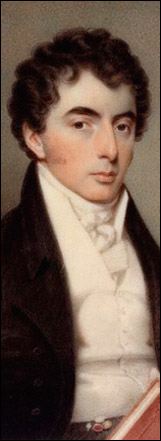
1812 7 Mar. Hertford, 2nd Marquess of Hertford served in this position until 1821, so would have been in office for most of the Regency. He received £3000 a year. A bust of him is shown in the Wallace Collection.
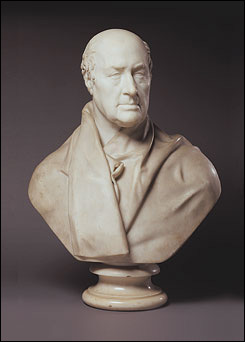
2nd Marquess of Hertford
The vice Chamberlains were:
1794 27 Jan. Greville, Hon. C.F.
1804 11 July Thynne, Lord J.
1812 14 Mar. Yarmouth, Earl of
1812 28 July Jocelyn, Viscount. Heir to the Earl of Roden
The Viscount served until 1827. He received over £1100 a year.

2rd Earl of Roden
It is seldom that the secretary officiates, the business of the office being, carried on by the first clerk.
The Secretary to the Chamberlain has under him two clerks, and three assistant clerks, who issue and enforce the lord chamberlain or the vice‑chamberlain's orders. These clerks prepare the lists of all the salaries and tradesmen's bills quarterly for
The Superintendant of Payments, who superintends the payments of this part of the household.
The Master of the Ceremonies has under him an assistant and marshal of the ceremonies. It is his duty to attend and regulate all matters of etiquette in the drawing‑rooms or levees, or wherever the state of the court is to be maintained. He attends the introduction of ambassadors to the royal presence, and all other foreigners of great distinction. The badge of his office is a chain of gold, with a medal, on which is king James's motto—Beati pacifici; on the reverse the motto of the garter. His salary is 300/. a year ; hit deputy has 6s. 8d. a day. The other officers are:
The Gentlemen Ushers of the Privy Chamber are four, and wait in the presence chamber near the king's person; they order all affairs after the lord chamberlain and vice‑chamberlain, and all under officers are to obey them. They have each a salary of 2001. per annum.
The Gentlemen Ushers Daily Waiters are four; of these, one is gentleman usher of the black rod, and the other serjeant at arms to the House of Commons. There is also an assistant gentleman usher, eight gentlemen ushers, quarterly waiters, and four grooms of the privy chamber. These may all be deemed state officers. A state page, and six pages of the back stairs, and five pages of the bedchamber.
The pages are the persons more immediately attached to the royal person; his barber, hair‑dresser, &c. are all denominated pages.
Pay‑Offiee is under the control of the board of green cloth, and consists of a paymaster, a deputy, an assistant, and messenger.
Auditor of the Civil List.
By act 56th Geo. III., c. 46, the commissioner* of the treasury are directed every quarter to set apart in the exchequer, such sums as are required for the purposes of the civil list, and are'to appoint an officer to audit the civil list accounts, and to prepare instructions for the guidance of such officer. This officer has power to summon persons before him, to require books, accounts, and vouchers, and to examine upon oath. Persons giving false evidence, subject to the same penalties as persons convicted of perjury.
seamstress and laundress
3 gentlemen who were Gentlemen ushers of the privy chamber @ 200
3 Gentleman ushers daily waiters One received 150£
3 Gentleman ushers Quarterly waiters one received 100£
Grooms of the Privy Chamber and Pages of the Presence.2
Pages of the Backstairs 4 @80£
Pages of Honour 2 @150£ each.
Physician
sargeants extraordinary ( lawyers)
Dentist
Oculist
apothecary
Reader
Queen’s Band of Music
Queen’s Chamber band
Porters
The Queen’s treasury was headed by Earl of Effingham @500
Secretary and Comptroller @ 500
clerk
Attorney general
Solicitor General
and 2 messengers.
Stables
- The Earl Harcourt was Master of the Horse @800
- Equerries @ 180
- Clerk of the Stables
- 5 coachmen @ 45
- 8 footmen @ 41 and 1 s each
- 2 grooms 55 10s each
- 4 chairmen @ 39 17s 6 d
- Five postilions 20£ 10s
- 5 helpers @ 20£ 10s
* There was also an establishment at Frogmore , overseen by her steward with a page, librarian, housekeeper, footman, upholsterer, gardener, and potter.
Ladies of the bedchamber of the Princesses
- Lady Isabella Thynne
- Countess of Rosslyn
- Lady Mary Taylor
- Lady Mary Powlett
- 4 dressers, 4 pages.
|
|

 The Wallace Collection - The 2nd Marquess of Hertford