 |
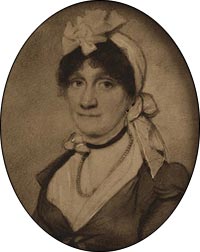
Miss Herschel acted as secretary to her brother as well as being a noted astronomer in her own right. In 1783 Caroline Herschel discovered three new nebulae , and between 1786 and 1797 , discovered eight comets.
Silliman described the telescope : ( vol.2 page 13)
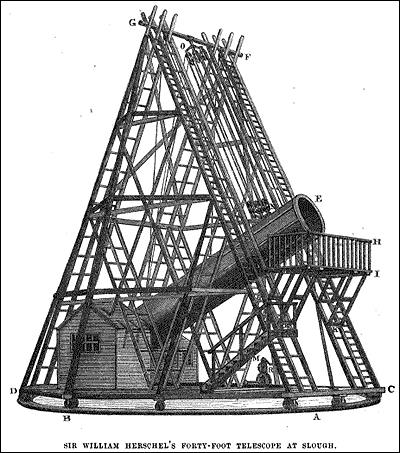
The tube of this telescope is forty feet in length, and five foot in diameter. The servant told us that his majesty had walked through it, and a boy of thirteen might do so without stooping. It is managed ( raised and lowered) by machinery and ropes, and, as it is always in the open air, exposed to the weather, the tube is painted to prevent rusting. The end in which the reflector is placed, is constantly closed, and the other also, when the instrument is not in use.
A swinging seat is connected with the elevated end of the tube, and moves with it when it rises and falls. On this Dr. Herschel sits, when he makes his observations. He looks in at the elevated end of the telescope , through a small interior tube, which receives reflected light from the great mirror at the lower end, and this transmits the rays to his eye. He therefore sits with his back to the celestial body.
On the framed work at the lower end of the telescope, which is contiguous to the ground, there are two small lodges, one on either side of the great tube. In one of these a servant attends, and in the other Miss Herschel sits, ready to record her brother's observations/ These he communicates to her without leaving his seat by means of a speaking trumpet, one orifice of which is at his mouth and the other at her ear.
|
There was also a swinging gallery where ladies sometimes gathered to take tea.
There were several other telescopes in the yard, one of which was being built for the Tsar of Russia.
During the Regency period, astronomers,and many who were just interested in the subject , looked for comets and searched the heavens for new planets.
In 1810, the planets were thought to be: Mercury, Venus, Earth, Mars, Ceres, Pallas, Jupiter, Saturn, and Herschel.
 Herschel? "Herschel" was discovered by William and Caroline Herschel on 13 March 1781, using one of his telescopes. It was discovered by the fact that it showed a disk when viewed through even a fairly low powered telescope. Herschel himself called the planet Georgium Sidus after George III , but it was popularly named for him. Later it was renamed Uranus to fit in with the names of the other planets. Herschel? "Herschel" was discovered by William and Caroline Herschel on 13 March 1781, using one of his telescopes. It was discovered by the fact that it showed a disk when viewed through even a fairly low powered telescope. Herschel himself called the planet Georgium Sidus after George III , but it was popularly named for him. Later it was renamed Uranus to fit in with the names of the other planets.
Ceres and Pallas? On the first day of January 1801, Giuseppe Piazzi discovered an object which he first thought was a new comet. But after its orbit was better determined it was clear that it was not a comet but more like a small planet. Piazzi named it Ceres, after the Sicilian goddess of grain. Three other small bodies were discovered in the next few years (Pallas, Vesta, and Juno). These were thought to be planets throughout the Regency period and even into the next decades.Astronomy books of 1825 were still listing them all as planets.
These were later known to be asteroids. http://www.nineplanets.org/asteroids.html
These discoveries and the comets had astronomers searching the heavens for more planets. Neptune's presence was suspected long before it could be verified, and Regency astronomers formulated and discarded various mathematical formulae searching for it. It was after the Regency that it and Pluto were seen and added to out solar system.
A book of Self Instruction for Young Men published in 1815 includes a section on astronomy. According to it, the Milky Way, or Via Lactea, or the Galaxy is a remarkable whitish track around the heavens... This was once thought to be caused by a certain exhalation hanging in the air; however, by the use of telescopes it is seen to be made up of many small stars.
 Astronomy Astronomy
|
|
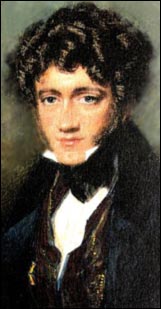

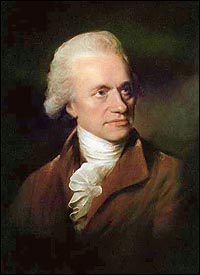 William Herschel was a well known astronomer and maker of telescopes.